


Are you paying for a pool cleaner that leaves debris in corners, drives up your electricity bill, or breaks down after two seasons? Many pool owners discover too late that their robotic cleaner’s impressive marketing claims don’t translate into real-world performance. The core dilemma is familiar: you want a sparkling clean pool without overspending, but cheaper models often disappoint while premium options may offer features you’ll never use. This article cuts through the noise to help you determine whether your pool robotics cleaner—or the one you’re considering—actually delivers genuine value. We’ll examine four critical evaluation pillars: the features that matter most for effective cleaning, filtration capabilities that protect your water quality, true cleaning efficiency measured by results rather than spec sheets, and the overall cost picture that extends far beyond the purchase price. Whether you’re shopping for your first robotic cleaner or questioning whether your current unit earns its keep, this guide provides a practical framework for making decisions based on evidence, not advertising.
Decoding the Essential Pool Cleaner Features
Not all robotic pool cleaners are built the same, and the features that separate a genuinely capable unit from a glorified pool toy come down to a few critical categories. Understanding these distinctions helps you identify whether a cleaner is suited to your pool’s shape, size, and typical debris load—or whether you’re paying for capabilities that won’t serve you.
Navigation systems represent perhaps the biggest differentiator in cleaning performance. Smart navigation uses onboard sensors or mapping technology to chart your pool’s dimensions and clean in systematic, overlapping passes, ensuring no spot is missed. Random-pattern cleaners, by contrast, bounce off walls and change direction arbitrarily, which means they may eventually cover the entire surface—but “eventually” can mean double or triple the cleaning time, with corners and tight areas frequently neglected. If your pool has an irregular shape, built-in benches, or multiple depth transitions, smart navigation pays for itself in coverage consistency alone.
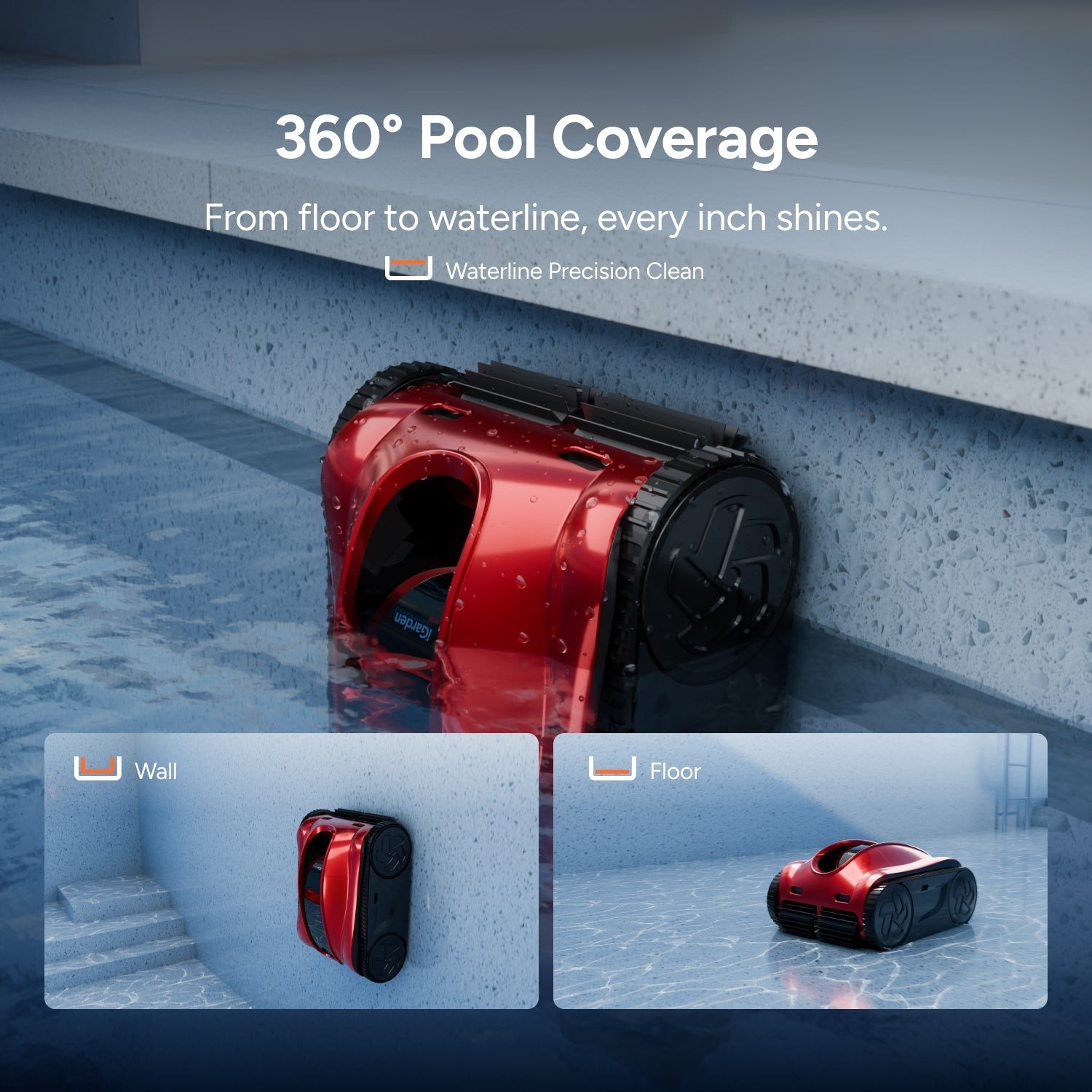
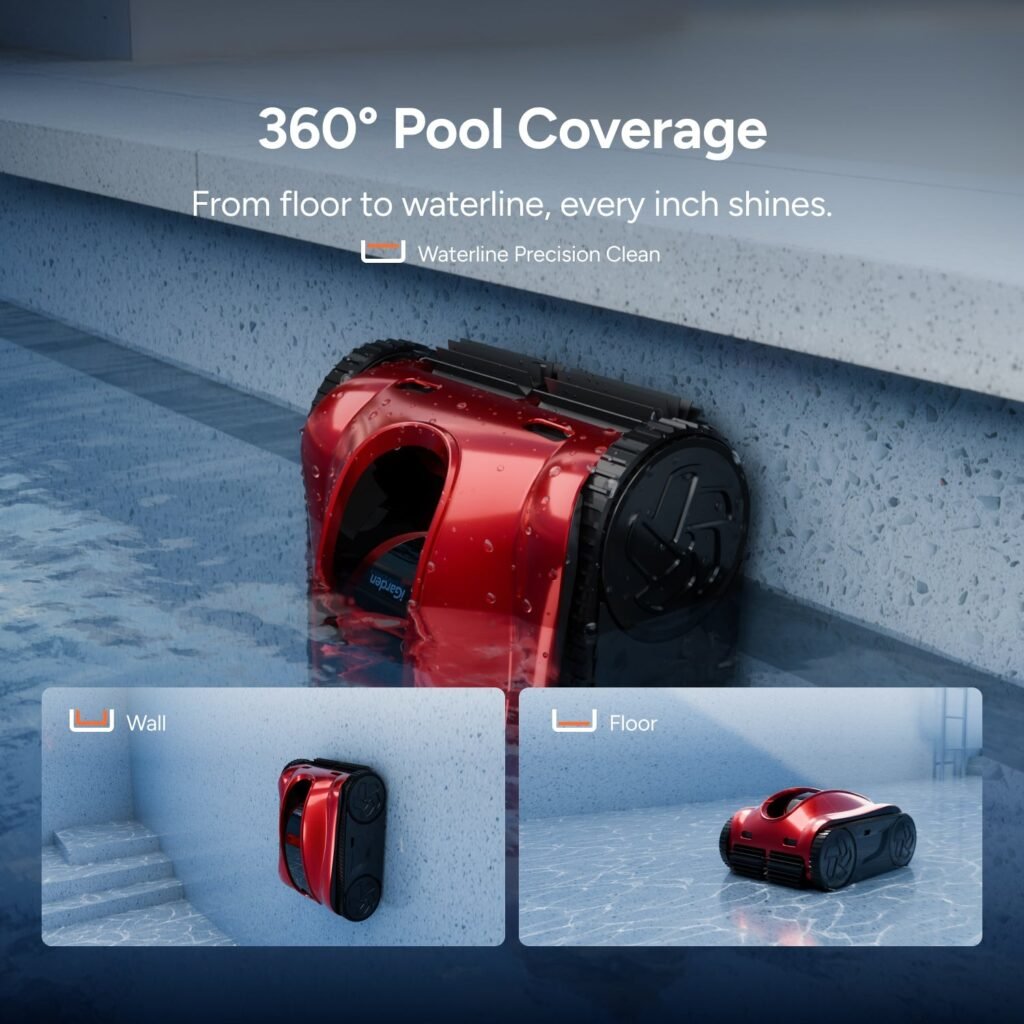
Cleaning cycle options determine how much of your pool actually gets attention. A floor-only cycle works for quick maintenance between deeper cleans, but models offering wall climbing and waterline scrubbing address the biofilm and mineral deposits that develop at the water’s edge—areas where algae often gains its first foothold. Consider which surfaces in your pool accumulate the most buildup and match your cleaner’s cycle options accordingly.
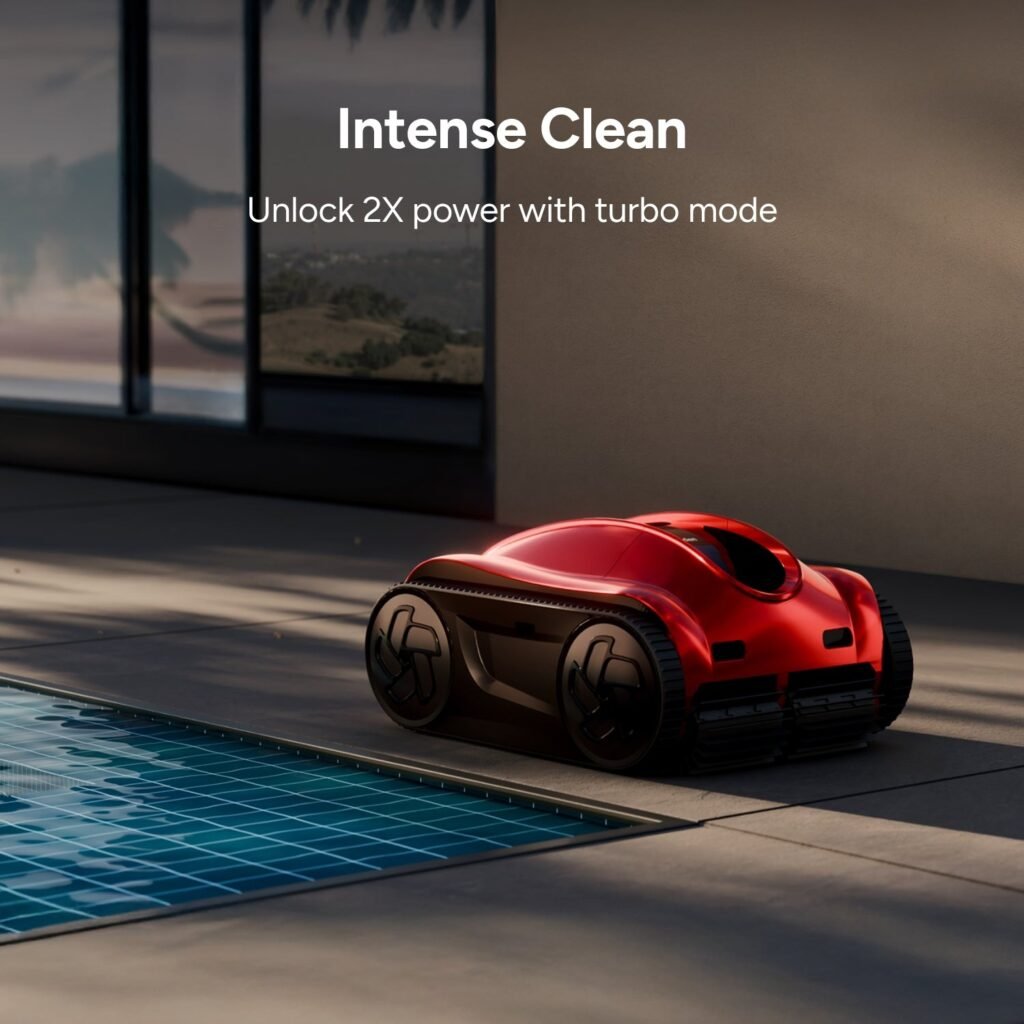
Energy efficiency matters more than most buyers realize. Robotic cleaners operate on low-voltage power supplies, but units with efficient motors and shorter required run times can cut electricity costs significantly over a season. Finally, smart features like smartphone app control, programmable scheduling, and filter-full indicators add genuine convenience by letting you automate cleaning routines and respond to maintenance needs without constant manual checking. Smart home platforms such as iGarden have helped popularize this kind of connected automation, and pool robotics manufacturers have followed suit—these aren’t luxury extras but time-saving tools that keep your cleaner running at peak performance between your interventions.
See also: Life Coaching Services for Personal Success and Fulfillment
Debris Filtration: The Unsung Hero of Clean Water
Most pool owners fixate on whether their robotic cleaner picks up leaves and acorns, but filtration performance extends far deeper—literally. The real measure of a cleaner’s filtration system is its ability to capture microscopic particles like pollen, fine sand, sunscreen residue, and algae spores that cloud your water and strain your chemical balance. A cleaner that grabs visible debris but lets fine particulates pass back into the pool is essentially redistributing the problem rather than solving it.
Filtration systems generally fall into three categories. Bag-style filters offer large capacity and easy disposal, making them practical for pools surrounded by trees or heavy organic debris. Cartridge filters provide finer filtration and are reusable after rinsing, though they require more frequent maintenance during heavy debris seasons. Some advanced units combine both approaches, using a coarse outer layer to trap large material while an inner fine-mesh cartridge catches smaller particles in a single pass.
The specification that matters most here is the micron rating—the smallest particle size the filter can reliably capture. Standard filters typically handle debris down to about 200 microns, which catches sand and most visible particles. Fine filters rated at 50 microns or below capture pollen, bacteria clusters, and ultra-fine silt that would otherwise remain suspended in your water. This distinction directly affects water clarity and chemistry: pools cleaned with fine-filtration robots typically require less clarifier, fewer shock treatments, and maintain more stable chlorine levels because the organic load is physically removed rather than left for chemicals to neutralize.
To evaluate whether a cleaner’s filtration matches your needs, observe what settles on your pool floor between cleanings. If you notice a fine dusty film rather than distinct debris pieces, prioritize units with sub-100 micron ratings. If your primary challenge is leaves, seed pods, or insect matter, capacity and flow rate matter more than ultra-fine filtration. Match the filter to your actual debris profile, and you’ll reduce both chemical costs and manual water treatment interventions throughout the season.
Measuring True Cleaning Efficiency: Beyond Speed
Cleaning efficiency isn’t simply how fast a robot finishes its cycle—it’s the relationship between time spent, energy consumed, and how thoroughly the pool emerges from the process. A unit that completes a cycle in ninety minutes but leaves patches of algae on steps or misses fine sediment along curved walls isn’t efficient; it’s just fast. True efficiency means the pool requires no touch-up work after the cleaner docks itself.
Several mechanical factors determine real-world efficiency. Motor power affects suction strength, but it works in concert with brush and scrubber design. Rotating bristle brushes physically dislodge biofilm and stuck-on debris before the vacuum intake pulls it into the filter, which means a moderately powered motor paired with aggressive brushes often outperforms a high-suction unit with passive rubber scrapers. Tire and tread design also plays an underrated role—cleaners that lose traction on slopes or slip off walls waste cycle time repositioning themselves rather than cleaning. Units with textured rubber tracks or anti-slip wheels maintain consistent contact with surfaces, particularly on vinyl and fiberglass pools where grip is more challenging.
When comparing efficiency across price points, watch for a common pattern: budget models often advertise comparable cycle times to mid-range units but achieve far less coverage per minute. Premium models may add marginal thoroughness improvements that don’t justify double the cost. The sweet spot typically sits with cleaners that complete a standard residential pool in two to two-and-a-half hours with verified full-surface coverage including steps and slopes.
To assess efficiency before buying, build a simple evaluation checklist. First, consult owner reviews specifically mentioning pools similar to yours in size and shape—look for comments about missed spots or repeated cycles needed. Second, check whether independent testing sources have measured actual coverage percentages rather than relying on manufacturer claims. Third, note how the cleaner handles transitions between floor, wall, and waterline, since hesitation at these junctions wastes significant time. Finally, compare energy draw per cycle rather than per hour, as this reflects the true cost of getting your pool clean rather than just running the machine.
Calculating True Value for Money: A Guide for Budget-Conscious Buyers
The sticker price of a robotic pool cleaner tells you almost nothing about its actual value. What matters is the Total Cost of Ownership (TCO)—the complete financial picture across the unit’s useful life. This shift in perspective is essential for budget-conscious buyers who want genuine performance without wasting money on either disposable cheap units or overengineered premium models packed with unnecessary extras.
TCO breaks down into four components that deserve equal attention. The initial purchase price is obvious, but energy consumption over a full pool season adds up quietly—a unit drawing 150 watts versus one drawing 70 watts creates a meaningful difference when running three to four cycles per week for six months. Replacement parts represent the hidden budget killer: filter bags, brush assemblies, tracks, and drive belts all wear out on predictable schedules. A cleaner requiring new brushes every season at forty to sixty dollars per set and filter replacements twice yearly adds hundreds to your real cost within three years. Finally, expected lifespan determines how many seasons you divide that total investment across. A mid-range unit lasting five to seven years almost always delivers better per-season value than a budget model that fails after two.
The models offering the strongest value proposition typically sit in the mid-range category—units that include smart navigation, fine filtration, and wall-climbing capability without adding premium-tier extras like voice control or caddy carts. These “value champions” deliver ninety percent of premium cleaning performance at fifty to sixty percent of the cost, with parts availability and build quality that support multi-year operation.
To compare models effectively using your own priorities, follow this framework. First, estimate your seasonal run frequency and multiply by the unit’s energy draw to project annual electricity cost. Second, identify all consumable parts and their replacement intervals from the manufacturer’s documentation—not from marketing materials, but from the actual user manual. Third, research warranty coverage specifics, noting whether the motor, power supply, and drive system are fully covered or excluded after the first year. Fourth, check parts availability for models over three years old; if replacement components become scarce, your investment dies with the first major wear item.
The cheapest robotic cleaners tempt buyers with accessible entry points but frequently use thinner housings, weaker motor assemblies, and proprietary parts that become unavailable once the model is discontinued. On the opposite end, the most expensive units often layer on connectivity features, multiple cleaning modes, and aesthetic upgrades that add cost without proportional cleaning improvement. The diminishing returns above the mid-range threshold are steep—you might pay forty percent more for five percent better coverage. Direct your budget toward proven mechanical reliability and filtration quality rather than software features or brand prestige, and your per-clean cost will remain low for years rather than months.
Making Smart Robotic Pool Cleaner Investments That Last
Determining whether your pool robotic cleaner delivers real value requires looking beyond surface-level promises and evaluating four interconnected pillars. Smart navigation and purposeful features ensure thorough coverage matched to your pool’s unique geometry. Effective debris filtration—measured in micron ratings and matched to your actual debris profile—protects water clarity and reduces chemical dependency. True cleaning efficiency accounts for coverage completeness and energy consumption together, not cycle speed alone. And the total cost of ownership reveals whether your investment pays off across years of reliable service or quietly drains your budget through replacements and premature failure.
Real value isn’t found in the cheapest option or the most expensive one—it lives in the cleaner that reliably addresses your pool’s specific challenges season after season without demanding excessive maintenance or surprise costs. Before purchasing or replacing your current unit, apply the evaluation framework outlined here: assess your debris type, measure true operating costs, verify coverage claims through independent reviews, and calculate what you’ll spend over five years rather than on day one. When you invest in the right robotic cleaner based on evidence rather than marketing, you reclaim something more valuable than money—you gain consistent, worry-free pool enjoyment with minimal hands-on intervention, turning maintenance from a recurring chore into a solved problem.