


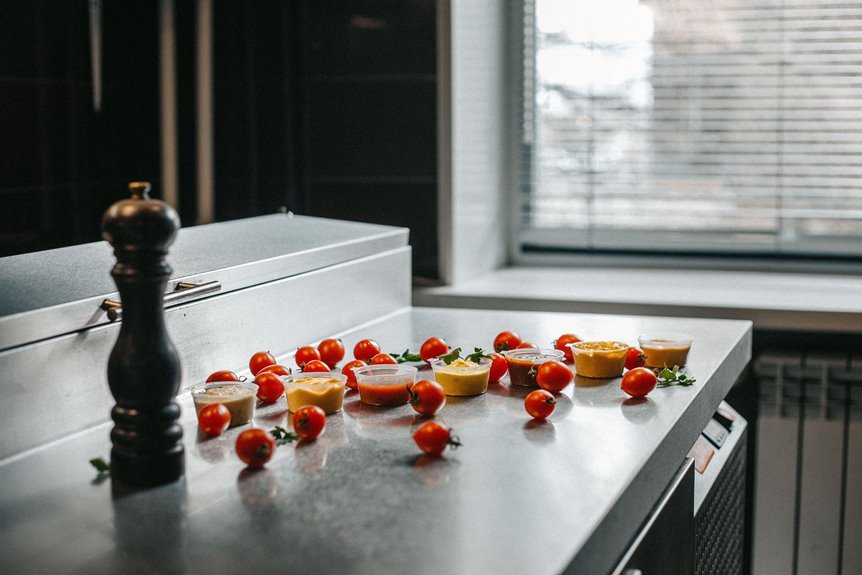
Homemaking sauces begins with a flexible base—tomato for brightness, dairy for richness, or oil for gloss and quick emulsification. Flavor builds quickly with pantry staples: garlic, shallots, miso or soy for umami, vinegars or citrus for acidity, tomato paste, and dried herbs. The process centers on balance—acidity, salt, fat, and viscosity—then finishes to suit the dish. Each decision narrows options, guiding choices as textures and tones emerge, inviting further exploration before the final touch.
Identify Flexible Base: Tomato, Dairy, or Oil-Based Sauces
A flexible sauce base can be categorized into tomato, dairy, or oil-based options, each offering distinct textures, flavors, and loading capacities for mix-ins.
Tomato-based versatility supports bright acidity and body, while dairy free substitutions enable smoothness without dairy.
Oil-centered bases provide gloss and rapid emulsification.
Selection guides texture, flavor range, and customization, empowering cooks to tailor sauces for freedom and function.
Build Flavor Fast: Pantry Staples for Seasoning and Depth
Pantry staples form a quick, reliable flavor backbone, enabling cooks to sharpen sauces without delays. The section highlights pantry staple ideas that intensify depth: aromatics like garlic and shallots, umami boosters such as miso or soy, acid balance from vinegars, citrus zest, and tomato paste, plus dried herbs. This supports clear flavor layering while maintaining accessible, freedom-oriented preparation.
Balance, Adjust, and Finish: Achieving the Right Taste and Texture
With pantry-backed flavor foundations in place, the next focus is fine-tuning sauce balance and texture. This step centers on balance, adjust, and finish: achieving the right taste and texture, guiding the diner toward harmony.
Identify flexible base: tomato, dairy, or oil based sauces, then calibrate acidity, salt, fat, and viscosity to suit purpose, audience, and freedom.
Adapt by Dish: Matching Sauces to Pasta, Proteins, and Veggies
Chefs tailor sauces to the item at hand, balancing how the sauce’s acidity, salt, and body complement pasta shapes, proteins, and vegetables.
Adaptation guides pairings by dish: delicate pastas suit lighter emulsions, hearty cuts welcome robust tomato or cream bases, and greens seek bright citrus notes.
Spice combinations and texture tweaks refine balance, enhancing resonance without overpowering the original ingredients.
Troubleshoot and Refine: Common Issues and Quick Fixes
When sauces don’t quite meet expectations, the focus shifts to diagnosing common faults and applying quick, reliable fixes.
A detached view reveals common pitfalls: overthickening, careful thinning with stock or water; dull flavor from insufficient seasoning; separation from fat; dull color from improper emulsification.
Quick tips emphasize gradual adjustments, tasting, and restraint to preserve texture and balance.
Frequently Asked Questions
How Long Do Homemade Sauces Stay Fresh in the Fridge?
Homemade sauces stay refrigerated for about 4 to 7 days, depending on ingredients; can i freeze sauces for longer storage, and freezing is feasible for many—but not all. These guidelines aim for dependable freshness, with mindful labeling.
Can I Freeze Sauces Without Altering Texture?
Freezing sauces can preserve them, but texture may shift; some sauces resist, others split. Freezing texture varies. He notes that dairy free alternatives often freeze better. With care, flavor remains, though mouthfeel may alter slightly.
Which Oil-Based Sauces Pair Best With Seafood?
Olive oil and lemon butter pair best with seafood, offering brightness and richness. The description remains precise and approachable, presenting a freedom-loving perspective as the sauce complements delicate proteins, enhancing flavor without overpowering them through balanced lemony, buttery olive oil notes.
What’s a Quick Dairy-Free Cream Sauce Substitute?
A quick dairy free cream substitutes solution appears: blend silken tofu with a splash of non-dairy milk and a pinch of salt, yielding a velvety sauce; quick dairy free options emerge, enabling creamy texture without dairy.
How to Fix a Sauce That Won’T Thicken?
The sauce is corrected by gradual heat and whisking to encourage binding, with starch or reduction used to fix thickness; this fixing of thickness aims for a cohesive body, while texture restoration restores smoothness and cohesive mouthfeel.
Conclusion
In the end, sauces are quiet characters that lift a meal without stealing the stage. Like a well-titted compass, a flexible base guides the journey, while pantry spark and citrus pin down the course. When balance finally settles, the dish sings—bright, rich, or glossy—yet never heavy. Adjustments, patience, and a taste-tested touch turn simple ingredients into a story. Served warm and confident, the sauce becomes the meal’s unsung compass, steering every bite toward harmony.