


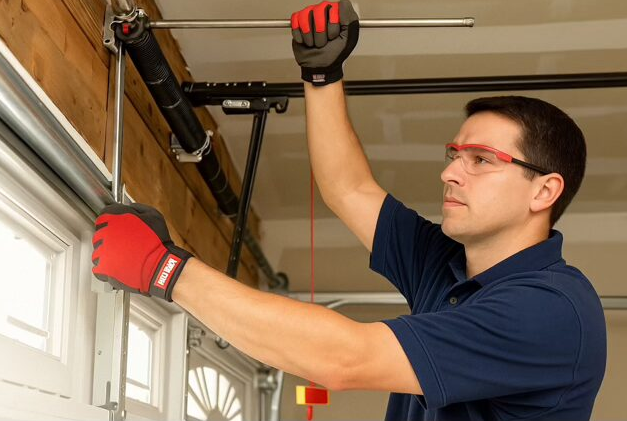
Most garage doors don’t actually “break” the way people imagine.
They don’t collapse. They don’t suddenly stop without warning. What usually happens is much quieter. Something changes first. A sound. A delay. A movement that feels slightly different from the day before.
And because garage doors are used so often, those small changes tend to blend into the background.
Until they don’t.
A door might hesitate halfway up. Or it closes a little harder than usual. Sometimes the opener runs but the door barely moves. At that point people usually start searching for garage door repair in Pitt Meadows, assuming something failed overnight.
In reality, the system has usually been drifting toward that moment for a long time.
Garage Doors Aren’t Lifted the Way Most People Think
A common assumption is that theopener motor lifts the door. It sounds logical. Press the remote, the motor runs, the door goes up.
But that’s not actually how the system works.
The door itself is heavy. Much heavier than it feels when everything is working properly. The reason it moves easily is because springs are doing most of the work behind the scenes.
When the door closes, the springs store energy. When the door opens, that stored tension helps counterbalance the weight. The opener mainly guides the movement rather than lifting the door by itself.
If the springs are doing their job correctly, the door feels balanced. You can even lift it manually without much effort.
But when the balance starts changing — even slightly — the entire system begins compensating.
That’s when strange behavior begins.
The Door Usually Warns You First
Technicians hear the same thing from homeowners all the time.
“It was making a noise for a while.”
“It started shaking a bit last month.”
“It felt heavier, but it was still working.”
Garage doors rarely go from perfect to broken instantly. The early signs are often subtle and easy to ignore. Maybe the door rattles slightly when it starts moving. Maybe the track makes a scraping sound that wasn’t there before.
At first it doesn’t seem serious. The door still opens, after all.
But mechanical systems don’t improve on their own. Small wear eventually spreads stress across other components.
That’s usually when people end up needing garage door repair in Pitt Meadows.
Springs Carry the Load
If there’s one part that determines whether a garage door feels light or impossibly heavy, it’s the springs.
These springs handle enormous tension every time the door moves. Thousands of cycles over the years slowly fatigue the metal. Eventually the spring weakens enough that the system loses balance.
When that happens, the difference is obvious.
The door may feel much heavier than usual. The opener struggles. Sometimes the door only lifts a few inches before stopping.
Occasionally homeowners hear a loud bang inside the garage when the spring finally snaps.
That sound is the stored tension releasing all at once.
Because these components operate under pressure, replacing them safely isn’t a simple DIY job.
See also: bitbackoffice business services overview
The Opener Isn’t Always the Real Problem
When the door stops moving, the opener is usually the first thing people blame.
But in many cases the opener is just reacting to another issue. If the door becomes unbalanced because of worn springs or cables, the motor suddenly has to lift far more weight than it was designed to handle.
At that point the opener might slow down, stall, or refuse to move the door entirely.
From the outside it looks like an electrical failure. Inside the system, it’s often just physics.
Noise Means Something Is Wearing Down
Garage doors aren’t silent machines, but they should sound consistent.
When the sound changes, something inside the system is usually wearing out.
Rollers gradually wear down after years of movement. Hinges loosen. Tracks shift slightly as the door travels along them thousands of times.
None of these changes happen dramatically. They build slowly.
The problem is that friction spreads. One worn component puts extra strain on the rest of the system.
Eventually the door begins reacting to that imbalance.
Why the Failure Feels Sudden
From a homeowner’s perspective, garage door problems often feel like they appeared overnight.
Yesterday everything worked. Today it doesn’t.
But mechanical systems don’t behave that way. Parts wear gradually. Tension changes slowly. Components adjust until one finally reaches its limit.
That final moment feels sudden, even though the process leading up to it may have taken years.
Garage door repair in Pitt Meadows often ends up correcting something that has been quietly developing for a long time.
When the System Is Balanced Again
Once the worn components are repaired or replaced, the difference is usually immediate.
The door moves smoothly again. The noise disappears. The opener no longer struggles.
And most homeowners return to the same routine they had before.
Press the remote.
The door opens.
Later it closes again.
No drama. No noise. No hesitation.
Which, for a garage door, is exactly how things are supposed to work.